The Brain Song Review 2026: I Listened to This 17-Minute Gamma Audio Daily — Here's What 30 Days Actually Did
Quick verdict: The Brain Song is a 17-minute digital audio track that uses brainwave entrainment to target gamma frequencies (~40 Hz) — a real area of active neuroscience research, including work at MIT. It is not a supplement and contains no ingredients, despite how it’s often marketed. After 30 days of daily listening, I noticed real but modest changes in mental clarity and recall — nowhere near the dramatic claims some reviews make, but consistent with what the underlying gamma research actually supports. At $39 with a 90-day guarantee, it’s a low-risk way to test gamma entrainment for yourself.
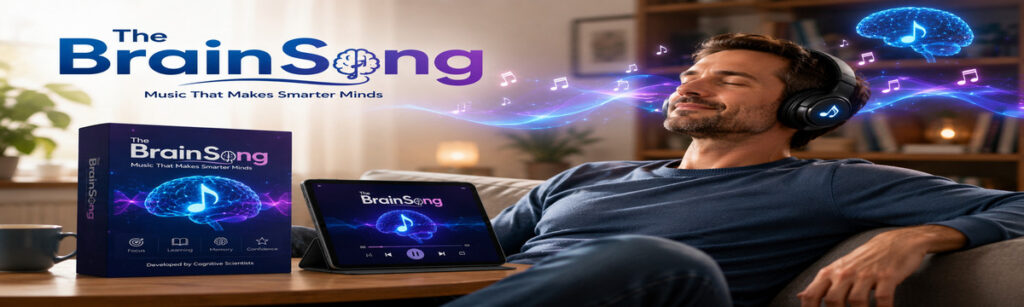
I want to start this review by clearing up something that took me longer to figure out than it should have: The Brain Song is not a pill, capsule, or supplement of any kind. It’s a 17-minute audio file. I mention this upfront because a significant portion of what’s written about this product online treats it as if it has “ingredients” or a “formula” — language that doesn’t apply here at all.
Once I understood what I was actually testing, I approached it the way I approach any audio-based brain product on this blog: 30 days, daily use, documented honestly, no assumptions carried over from the marketing copy.
Here’s what I found — including what the actual gamma wave research says, separate from what the sales page claims.
What The Brain Song Actually Is
The Brain Song is produced by a company called Binaural Technologies, based in St. Petersburg, Florida. It’s sold as a digital download — you get one audio file, 17 minutes long, designed to be listened to with headphones, once per day.
The mechanism is brainwave entrainment targeting gamma frequencies, specifically around 40 Hz. This is the same general category of technology as The Genius Wave, which I reviewed previously — but where The Genius Wave targets theta waves (4–8 Hz, associated with relaxation and creativity), The Brain Song targets gamma waves (around 40 Hz), which are associated with a completely different set of brain functions: high-level cognitive processing, attention binding, and memory consolidation.
This distinction matters. Theta and gamma aren’t “more or less powerful” versions of the same thing — they’re different ends of the brainwave spectrum associated with different mental states. Theta is for entering a relaxed, creative, almost meditative state. Gamma is associated with the brain actively processing and integrating information at a high level.
The Gamma Wave Research: What's Real and What's Exaggerated
This is the section I spent the most time on, because the gamma wave space has both legitimate science and significant exaggeration happening simultaneously — sometimes in the same article.
What’s genuinely well-established:
Gamma waves are real, measurable brain oscillations associated with high-level cognitive tasks — attention, working memory, and the process by which different brain regions communicate with each other (“neural binding”). This isn’t fringe neuroscience; it’s foundational.
What’s genuinely exciting and recent:
Researchers at MIT’s Picower Institute, led by neuroscientist Li-Huei Tsai, have spent nearly a decade building a substantial body of evidence that 40Hz sensory stimulation — light, sound, or both — can have measurable effects on brain health. Their research, often referred to as GENUS (Gamma Entrainment Using Sensory Stimuli), has progressed through mouse studies into human clinical trials, including work with a company called Cognito Therapeutics. Phase II trials in Alzheimer’s patients showed a slowing of brain atrophy and improvements on some cognitive measures compared to untreated control groups. A long-term study published in late 2025 found that two years of daily 40Hz audiovisual stimulation was safe and feasible, with some patients showing slowed cognitive decline.
This is legitimate, ongoing research from one of the most respected neuroscience institutions in the world. It’s also worth being precise about what it actually shows: the MIT and Cognito research is specifically focused on Alzheimer’s disease and cognitive decline in older adults — using a dedicated light-and-sound device, under research protocols, often for 60 minutes daily over months or years.
What’s exaggerated in most marketing — including some Brain Song reviews:
A separate, smaller pilot study (a 9-person exploratory study) found a modest improvement in cognitive scores after gamma entrainment sessions — but the result was only at “weak statistical significance” (p = 0.076, for anyone checking the numbers), and the study authors themselves noted the limitations of measuring effects from a single session.
The honest summary: the concept behind gamma entrainment is backed by real and growing research, particularly from MIT’s body of work — but the specific claim that a 17-minute audio track produces measurable cognitive benefits comparable to a 60-minute daily light-and-sound device used for months in a clinical trial is a significant leap. The Brain Song itself has no published clinical trials of its own. It’s leveraging the credibility of gamma research broadly without having been tested specifically.
My 30-Day Experience
I listened to the 17-minute track every morning, with over-ear headphones, before starting work — the same setup I used for The Genius Wave, which made for an interesting personal comparison.
Week 1: Different from The Genius Wave, immediately
The first thing I noticed was that this didn’t feel relaxing the way the theta-based audio did. The Genius Wave has a calming, almost meditative quality. The Brain Song’s gamma-frequency audio felt more “active” — less like settling into stillness and more like a kind of mental warm-up. Some days it felt slightly activating in a way that was useful before focused work; other days, particularly when I was already tired, it felt mildly uncomfortable — a sensation some other reviewers have also described as a faint pressure or “buzzing” feeling during the session.
Week 2: Subtle clarity, hard to separate from routine
By the second week, I noticed my recall during morning meetings felt slightly sharper — retrieving names and details I’d discussed the day before came a bit more easily. I want to be careful here: this is exactly the kind of subjective effect that’s hard to distinguish from simply having a consistent morning routine. I can’t rule out that part of what I noticed was the structure of “do something deliberate before work” rather than the gamma frequencies specifically.
Week 3: No dramatic shift
This is where I have to be honest about expectations versus reality. Some marketing around gamma audio products implies effects comparable to nootropic supplements or even prescription cognitive enhancers. I didn’t experience anything close to that. Week three felt similar to week two — mild, consistent, but not transformative.
Week 4: Settled into a habit, modest but real benefit
By the end of the month, the clearest thing I could say is that the session became a consistent part of my morning, and on days I skipped it (a few times due to travel), I didn’t notice a dramatic difference in how I felt — which is itself informative. The effect, if real, is subtle enough that missing a day doesn’t produce an obvious “withdrawal.”
What I Liked
The time commitment is minimal. 17 minutes is a reasonable ask, similar to The Genius Wave’s format.
The gamma research connection is genuinely interesting. Learning about the MIT GENUS research was the most valuable part of this review process — it’s a legitimately exciting area of neuroscience, even if this specific product hasn’t been clinically tested.
No ingredients, no supplement interactions to worry about. Since it’s purely audio, there’s nothing to take, nothing that interacts with medications, and no concern about quality control of physical ingredients.
The 90-day guarantee is generous and verified. Confirmed through official press releases: 90 days, processed through ClickBank, no-questions-asked refund policy.
What I Didn't Like
The marketing leans heavily on borrowed credibility. A significant amount of content about The Brain Song references “Harvard” or “MIT” research on gamma waves in a way that implies the product itself has been validated by these institutions. It hasn’t. The research is real; its application to this specific 17-minute audio track is an assumption, not a finding.
Some mirror sites make false claims. I found references to “FDA-approved” claims circulating about this product. This is not accurate and is not a claim made by the official brand. If you encounter sites making this claim, treat them as unreliable.
The sensation during listening isn’t always pleasant. Unlike The Genius Wave’s more universally calming theta audio, the gamma frequency in The Brain Song produced a mildly uncomfortable sensation for me on some days — described elsewhere as similar to mild “buzzing” or pressure. This is subjective and may not apply to everyone, but it’s worth knowing going in.
Effects are subtle and slow to confirm. If you’re hoping for a noticeable “switch flip” experience, 30 days of daily use produced something closer to “maybe slightly sharper” than “clearly different.”
It’s a digital-only product with a single audio file. There’s no app, no variety of sessions, no progression — just the one 17-minute track, used daily.
Who Should Try The Brain Song
Good fit if you:
- Are curious about gamma wave brainwave entrainment and want a low-cost way to experience it personally
- Already use audio-based focus tools (like The Genius Wave) and want to compare a gamma-based approach to a theta-based one
- Want a no-ingredient, no-pill option for a cognitive routine
- Are comfortable with subtle, gradual effects rather than expecting dramatic results
Skip it if:
- You’re looking for something with published clinical trials behind the specific product
- You’re sensitive to binaural audio and find certain frequencies uncomfortable
- You’re dealing with a diagnosed cognitive condition — in that case, the legitimate research (GENUS/Cognito) involves dedicated devices and medical supervision, not a downloadable audio file, and you should discuss options with a healthcare provider
- You’ve seen claims of “FDA approval” associated with this product and were relying on that — it’s not accurate
How It Compares
vs. The Genius Wave (theta entrainment): These target different ends of the brainwave spectrum for different purposes. The Genius Wave felt more immediately pleasant and was better suited to my creative work sessions. The Brain Song felt more “activating” and, for me, was better suited to analytical tasks — though the difference was subtle enough that I wouldn’t make a major decision based on this alone. If you’re choosing between the two, theta (Genius Wave) is the gentler entry point; gamma (Brain Song) is the more novel but less immediately comfortable option.
vs. the MIT/Cognito GENUS research approach: Not a fair comparison in terms of rigor — the MIT research uses dedicated light-and-sound devices, runs for 60 minutes daily over months to years, and is conducted under clinical trial conditions for specific populations (Alzheimer’s risk). The Brain Song borrows the underlying concept (gamma entrainment) but operates at a completely different scale of evidence. Think of it as “inspired by” rather than “based on” that research.
vs. doing nothing / a quiet morning routine: Honestly, the most defensible claim I can make after 30 days is that The Brain Song gave me a structured 17-minute ritual that I might otherwise have spent scrolling my phone. Whether the gamma frequencies themselves added meaningful value beyond “17 minutes of quiet, deliberate attention” is something I can’t fully separate out from personal experience alone.
Pricing
Price: $39 one-time (single audio file, lifetime access) Guarantee: 90 days, money-back, no questions asked — processed through ClickBank Format: Digital audio download Manufacturer: Binaural Technologies, St. Petersburg, FL — sold via brainsongoriginal.com
Important: Be cautious of third-party or “mirror” sites making claims (such as FDA approval) that aren’t supported by the official brand. Purchase through the official channel to ensure the refund policy applies.
Frequently Asked Questions
Is The Brain Song a supplement? No. It’s a digital audio file. It contains no ingredients and there’s nothing to ingest.
What headphones do I need? Stereo headphones — over-ear or in-ear, wired or Bluetooth — are recommended for the binaural effect to work as intended.
Is gamma wave research legitimate? Yes, broadly. Research from MIT’s Picower Institute and the company Cognito Therapeutics has produced a substantial and growing body of evidence on 40Hz sensory stimulation, particularly in the context of Alzheimer’s disease. However, this research is distinct from — and more rigorous than — any claims made specifically about The Brain Song as a product.
Is it safe? Brainwave entrainment audio is generally considered safe for healthy adults. As with any entrainment audio, people with epilepsy or certain neurological conditions should consult a doctor before use, since rhythmic sensory stimulation can theoretically be a consideration for seizure-prone individuals.
How long until I notice anything? Based on my experience, any effects are subtle and build gradually — don’t expect a dramatic shift in the first few sessions.
What if it doesn’t work for me? The 90-day guarantee, verified through official press releases and processed via ClickBank, allows for a full refund. Contact support with your order ID.
Final Verdict
The Brain Song sits in an interesting and slightly frustrating position: the broader scientific territory it occupies — gamma wave entrainment — is one of the more legitimately exciting areas of neuroscience right now, with real research coming out of MIT. But the specific product hasn’t been clinically validated on its own, and a lot of the content surrounding it overstates the connection to that research, with some sites making claims (like FDA approval) that simply aren’t accurate.
What I can say from personal experience: 30 days of daily use produced subtle, not dramatic, changes — modest clarity and recall benefits that are hard to fully separate from the value of a consistent morning routine. For $39 with a 90-day guarantee, the financial risk of finding out for yourself is low. Just go in understanding what the research does and doesn’t say about this specific product, and be skeptical of any site that tells you otherwise.
→ Try The Brain Song — Official Website + 90-Day Money-Back Guarantee

About Alexandre
Alexandre is the founder and lead curator of Find All Here — a platform dedicated to helping people discover practical, science-backed solutions across wellness, self-improvement, focus, and everyday life. With a passion for honest research and real-world results, he handpicks and personally evaluates every product featured on this blog. Based in Brazil, writing for a global audience.